
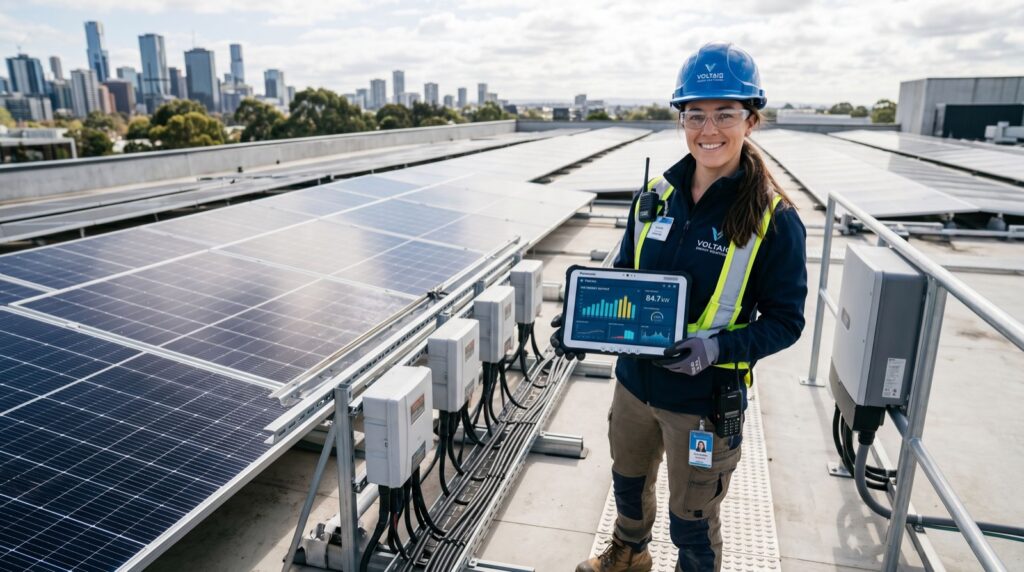
Coastal humidity, salty sea breeze, and a grid that struggles under peak demand make choosing the right solar panels in Karachi a slightly different exercise than it is inland. What works flawlessly in a dry desert town can corrode or underperform along the Arabian Sea coast if the wrong materials are used.
This 2026 guide focuses on the technology decisions that matter most for a port megacity: which panel chemistry handles heat and moisture best, whether you need batteries, and how to protect equipment from salt-laden air. Get these right and your rooftop will quietly outlast the mortgage.
Choosing solar panels in Karachi for a coastal climate
Karachi enjoys strong year-round sunshine, but its marine environment introduces two stressors: high humidity and airborne salt. Both accelerate corrosion on cheap frames and connectors, so material grade is not a place to economise here.
Look for panels with anodised aluminium frames, corrosion-resistant mounting hardware, and a robust IP-rated junction box. These specifications rarely appear in the cheapest quotes, yet they are precisely what keeps a coastal array healthy past the ten-year mark.
Monocrystalline versus polycrystalline for the coast
Monocrystalline modules deliver higher efficiency per square metre and perform better in the diffuse light of humid mornings. For Karachi’s often hazy skies and limited premium roof space, that efficiency edge usually justifies the modest price premium over polycrystalline.
Comparing the main panel technologies
Not every panel suits a hot, humid rooftop. This table summarises how the common options behave in coastal conditions so you can shortlist with confidence.
| Panel type | Efficiency | Heat tolerance | Best for |
|---|---|---|---|
| Mono PERC | 20-22% | Very good | Compact urban roofs |
| Mono half-cut | 21-22% | Excellent | Partial shading, hot climate |
| Polycrystalline | 16-18% | Moderate | Large open roofs on a budget |
| Bifacial mono | 21-23% | Excellent | Reflective flat rooftops |
Half-cut and bifacial modules cope better with the partial shading common on cluttered city rooftops, because a shaded cell drags down less of the string. That resilience matters in dense neighbourhoods with water tanks and parapets.
Do you need batteries in Karachi?
Load shedding is a real consideration, so many households weigh a battery bank against a pure grid-tied setup. The right answer depends on how much backup you truly need and your budget.
- Grid-tied only: Lowest cost, best payback, but no power during outages.
- Hybrid with small battery: Keeps fans, lights, and internet running through short outages.
- Hybrid with large battery: Runs essentials and one AC, at a significantly higher price.
For most bill-focused homeowners, a grid-tied system with net metering delivers the strongest returns. Add a modest battery only for the specific circuits you cannot live without. Working with quality service providers ensures your battery is sized to real backup needs rather than a salesperson’s upsell.
How salt air changes the maintenance routine
Coastal dust mixed with salt forms a sticky film that ordinary rain does not fully wash away. Rinse panels with clean water every few weeks and inspect connectors annually for early signs of corrosion. Catching a corroded MC4 connector early prevents a hot spot and a costly outage later.
Sizing and net metering for a metro household
Karachi’s tariff structure rewards daytime self-consumption, and net metering lets you bank surplus generation as credit. Size your array to cover your annual usage with a little headroom, not to chase the largest number.
Global installation trends reinforce this practical, right-sized approach. The International Renewable Energy Agency reports that solar continues to be the most rapidly deployed generation technology worldwide, driven precisely by these attractive household economics.
An installation checklist that avoids coastal pitfalls
Follow this sequence to keep a Karachi project on track from survey to switch-on.
- Confirm roof orientation and measure available un-shaded area.
- Specify corrosion-resistant frames, hardware, and junction boxes.
- Choose mono half-cut panels for shading and heat resilience.
- Decide grid-tied versus hybrid based on your backup needs.
- File the net-metering application early to avoid delays.
- Insist on a commissioning report and monitoring app access.
A tidy install with salt-rated materials costs marginally more today and saves far more in avoided repairs over the years. A reputable solar installation company will happily walk you through each of these steps before you commit.
Original tip: mind the rooftop temperature
Panel output drops as cell temperature rises, and dark Karachi rooftops can get blisteringly hot. Ask your installer to raise the array a few extra centimetres off the roof surface to improve airflow underneath. That small design choice can recover a meaningful slice of summer generation that a flush-mounted array simply loses to heat.
Inverters and monitoring for city rooftops
The inverter converts DC from your panels into the AC your home uses, and it works hardest during Karachi’s blazing afternoons. Choose a unit with a wide operating temperature range and a proven heat-dissipation design, because an inverter that throttles in the heat quietly steals your peak generation.
Modern inverters include smartphone monitoring that shows daily generation, self-consumption, and export figures in real time. This visibility is genuinely useful in a metro setting, where a sudden dip might signal a shaded panel, a dirty array, or a connector problem you can address before it costs you units.
Placement matters in dense neighbourhoods
Wall-mount the inverter in a shaded, ventilated spot away from direct sun and rain. In tightly packed Karachi buildings, a cool utility area or a covered balcony works far better than an exposed exterior wall. Good placement extends inverter life and protects your warranty.
Budgeting realistically for a Karachi home
Costs shift with system size and component grade, but planning around realistic figures prevents nasty surprises. A grid-tied setup is the most affordable entry point, while hybrid systems with storage carry a clear premium for the backup they provide.
- Entry grid-tied: lowest cost, fastest payback, no outage cover.
- Hybrid ready: modest premium for future battery expansion.
- Full hybrid: highest cost, essentials and cooling during outages.
Match the tier to your actual pain point. If your neighbourhood rarely loses power, the entry grid-tied route delivers the strongest returns without paying for storage you seldom use.
Frequently Asked Questions
Which solar panels last longest in Karachi’s humid air?
Tier-1 monocrystalline panels with anodised frames and salt-mist-tested certification last longest. Pair them with corrosion-resistant mounting to protect the whole system.
Is net metering available for Karachi homes?
Yes. Homeowners can apply through their utility to export surplus daytime generation for credit, which shortens payback significantly for daytime-heavy households.
How often should coastal panels be cleaned?
Every two to three weeks during dry spells, and after any dust storm. Salt film reduces output more than ordinary inland dust, so consistent rinsing matters.
Can I add batteries later instead of now?
If you choose a hybrid inverter at installation, you can add or expand a battery bank later. A pure on-grid inverter would need replacing to add storage.
Conclusion
The best solar panels in Karachi are the ones matched to a hot, humid, salt-touched environment: efficient monocrystalline modules on corrosion-resistant hardware, sized sensibly for net metering. Add storage only where you truly need backup, keep the panels clean, and your investment will keep paying off through 2026 and long beyond. Talk to a proper installer and get a coastal-ready design today.